Over the last few weeks, I’ve felt a growing pressure, mostly internal, but now also external, to say something about what’s happening in the streets of Minneapolis. The images are horrifying. The headlines can be numbing. The enforcement tactics being used against protesters who are exercising what I thought were clearly protected First and Second Amendment rights are deeply troubling to me.
In fact, I find many of the tactics deployed in American streets and communities flat out morally repugnant. My civics and social studies teachers would be proud (or horrified) that I recognize what’s happening as a full-on cheese-grater to the Constitution shredding our right to peaceably assemble, to speak freely, to protect ourselves, and to not be surveilled or searched without cause. On civic grounds alone, it’s unacceptable. So, the civic and religious part of me is really struggling right now.
But as a preacher, my struggle hasn’t been what I believe. I know what I believe. The hard part is knowing what helps and what heals, what gives hope, what adds clarity rather than noise. When images incite fear and disgust and moral indignation, but we feel powerless to stop them, what then? Do we say nothing? Do we risk saying too much? Is silence complicit? I’ve been stewing in that tension for weeks.
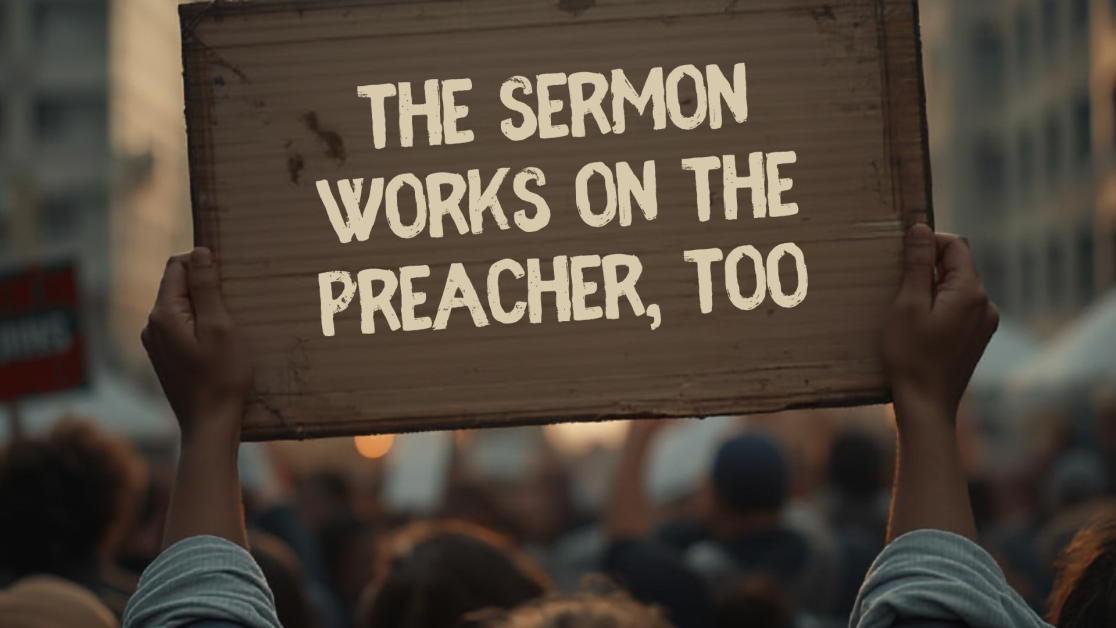
And then I realized… the sermon series is doing its job. It’s working on me.
We’ve been preaching on courage these last few weeks. Not performative bravery or loud conviction, but the kind of deep, durable, Christ-shaped courage that transforms character and calls us into action even when we’re uncertain or afraid.
We began with the Courage to Be Named. To be grounded in the truth that every human being is created in God’s image, claimed by grace, and of sacred worth. That’s why when we see bear spray in the faces of subdued protestors, children being used as bait, extrajudicial killings and preschool teachers disappeared, this strikes us as a deep moral violation. It violates the name God has put on each and every one of us.
In our baptismal vows as United Methodists, we promise to resist evil, injustice, and oppression in whatever forms they present themselves. This moment -these weeks- are exactly the kind of forms those promises prepare us for. That’s why our souls are stirred. That’s why doing nothing doesn’t feel like a choice for us.
But then we moved to the Courage to Be Vulnerable. And that’s where I’ve been living. Not knowing what to say, or how to say it in a way that actually adds anything helpful, is deeply uncomfortable as a public figure and speaker. Risking that confession is vulnerable. But maybe that’s part of the work: to persist even when we’re not sure what to say or do. If we lived in Minneapolis right now, I imagine many of us would feel a visceral need to do something, because we’re feeling it 400 miles away. For some, it would be showing up in protest. For others, delivering groceries or hot cocoa. For others still, making sure our kids’ daycare workers or house cleaners get home safely. These are all forms of courageous vulnerability. None are easy. All are needed and risky.
Then came the Courage to Listen First. It’s so easy to react. Our culture conditions us for it. But reaction without listening often leads to escalation. And escalation is exactly what we’re seeing. But if we listen, if we slow down and pay attention to the voices in the streets, the people behind the headlines, the communities aching for justice, the most vulnerable on our PTO and favorite restaurants, we’ll find something remarkable: unity. Not kumbaya unity, but moral, grassroots, boots-on-the-ground, neighbor-to-neighbor unity that transcends race, religion, and politics. People who never thought they’d be on the same side are finding common causes. Why? Because they listened. Because they cared. That’s what algorithms can’t predict. And it’s what the powers-that-be don’t know how to control. And that’s why the reaction has been so extreme. Because unity is powerful. And listening first reveals just how many of us are ready to live differently.
In the weeks ahead, Pastor Heather and I will be preaching on:
- The Courage to Love Anyway: means showing up for the wounded and refusing to accept a world that keeps putting people in the ditch.
- The Courage to Endure: to keep going when the cameras fade and the urgency wanes.
- The Courage to Empty Ourselves: to embrace humility, generosity, and surrender rather than control.
Each of these sermons and this kind of courage is what heals the world, rights the wrongs and brings peace for everyone; not by might but by Jesus’ courageous journey to the cross. These sermons are shaping me as much as I hope they’re shaping you. That’s the gift and the burden of preaching. It forms the preacher, too.
So maybe this blog is my statement. Not because I needed to say something, but because I’m being shaped by the very gospel I preach. Because I believe God still calls us to speak out, to stand up, to move with courage even when our voices shake and fear is all around.
So, what can we do?
Of course, we can call our lawmakers. We can protest or advocate or organize our own community. Some of us already are. But around our dinner table the other night, we wondered:
What if we could remind the people of Minneapolis that they’re not alone? That there are people outside their community who see them. Hear them. Pray for them. And we don’t want them to feel alone.
So, here’s what we came up with: a simple, powerful act of solidarity.
We’ve compiled a list of Houses of Worship in Minneapolis. You can sign up for one using our Sign up Genius. When you do, we ask you to:
- Pray for that congregation and their witness in this difficult time.
- Write a note or card – something simple, heartfelt, encouraging. Let them know that you and people of the United Methodist Church of Geneva are with them in spirit.
It may not feel like much. But any of us who have suffered in isolation know the breath of life it is when someone shows up, says they see you, and walks with you. That’s what courage looks like, too.
So, let’s keep walking shaped by the gospel, growing in sanctification, formed in love, and committed to a God’s kindom where justice rolls down like waters and righteousness like an ever-flowing stream.